Explaining Pain
Definition of Pain
"An unpleasant sensory and emotional experience associated with, or resembling that associated with, actual or potential tissue damage".
Raja et al. The revised International Association for the Study of Pain definition of pain: concepts, challenges, and compromises. Pain. 2020;161(9):1976-1982.
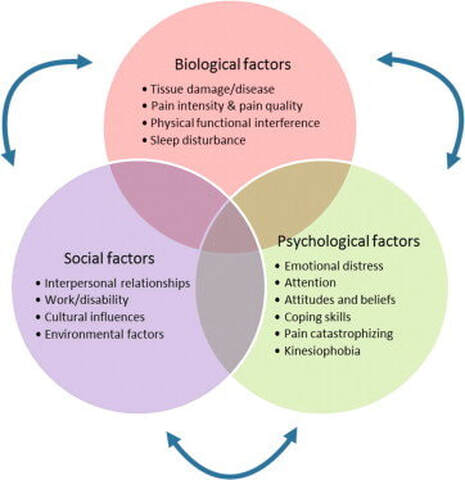
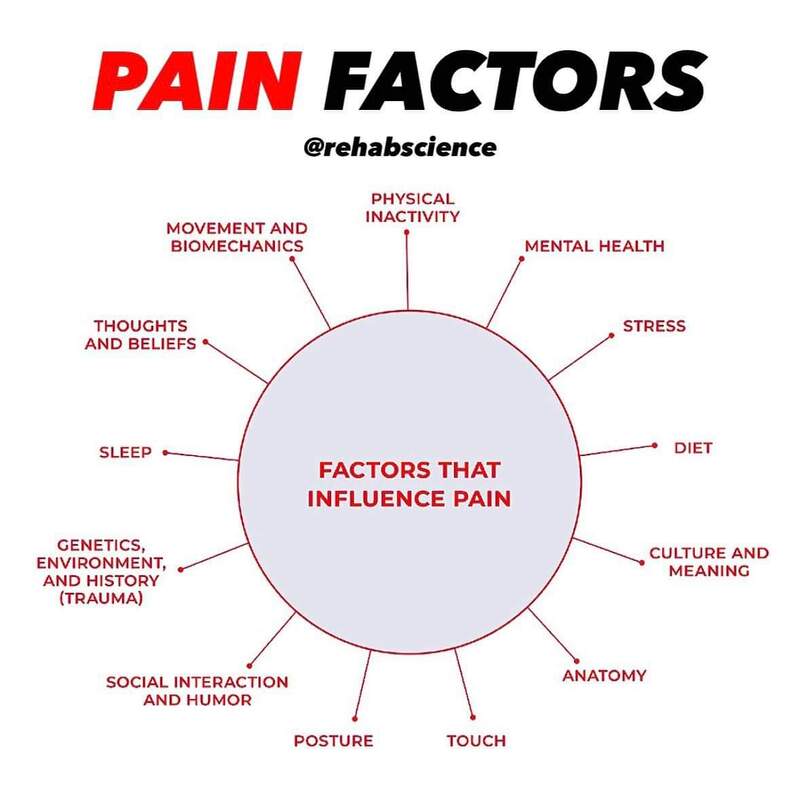
The biopsychosocial model of pain
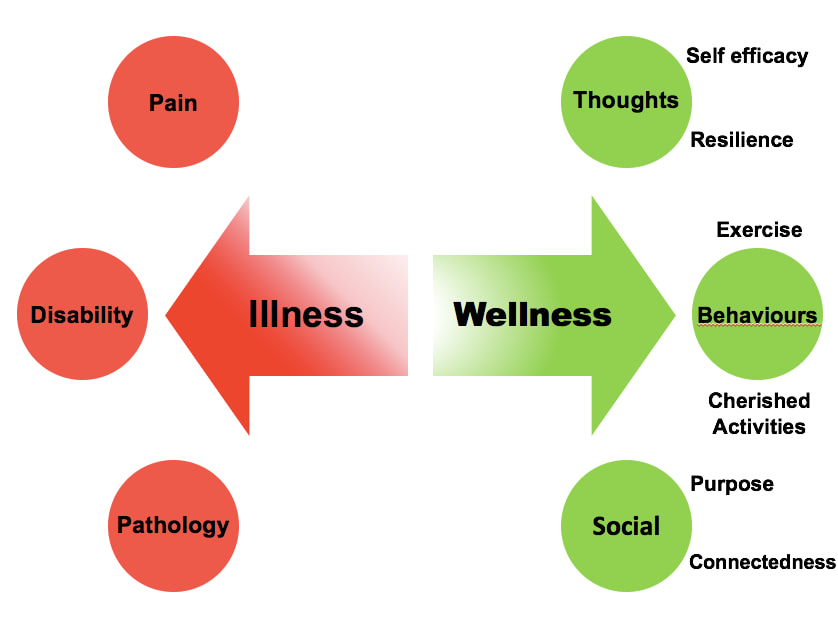
A modern approach to pain that considers more than just tissue damage alone. Management of pain should incorporate consideration of the following issues.
Patterns of pain
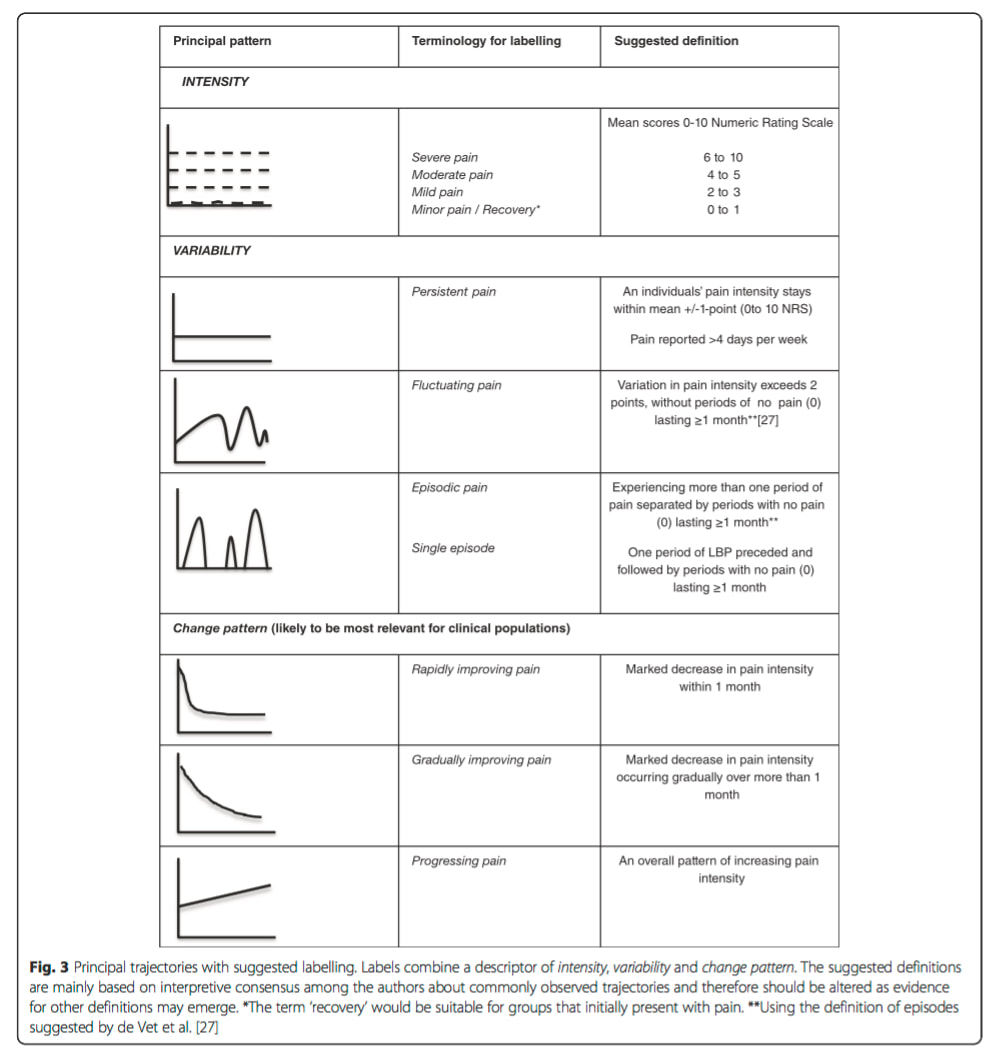
The terms acute (new) and chronic (>3 months) have traditionally been used to describe pain. However, these terms do not explain many pain presentations and have been modified. The term "trajectory" or "pattern" is commonly used to describe the path that pain has taken.
Generally speaking, the newer a problem the greater the role of assessment and management by the practitioner. Whereas the older the problem, the greater the role of active participation by the patient (particularly exercise interventions that incorporate mindful beneficial behavioural change).
Best results are achieved with a balanced partnership by the patient and the practitioner.
The terms acute (new) and chronic (>3 months) have traditionally been used to describe pain. However, these terms do not explain many pain presentations and have been modified. The term "trajectory" or "pattern" is commonly used to describe the path that pain has taken.
Generally speaking, the newer a problem the greater the role of assessment and management by the practitioner. Whereas the older the problem, the greater the role of active participation by the patient (particularly exercise interventions that incorporate mindful beneficial behavioural change).
Best results are achieved with a balanced partnership by the patient and the practitioner.
"Rest is rust and motion is lotion"
It is important to keep moving, even when you have an injury.
Some movement is better than no movement.
If one body part is severely effected, continue to use the other parts.
Reduce your intensity and / or duration of movement but keep moving.
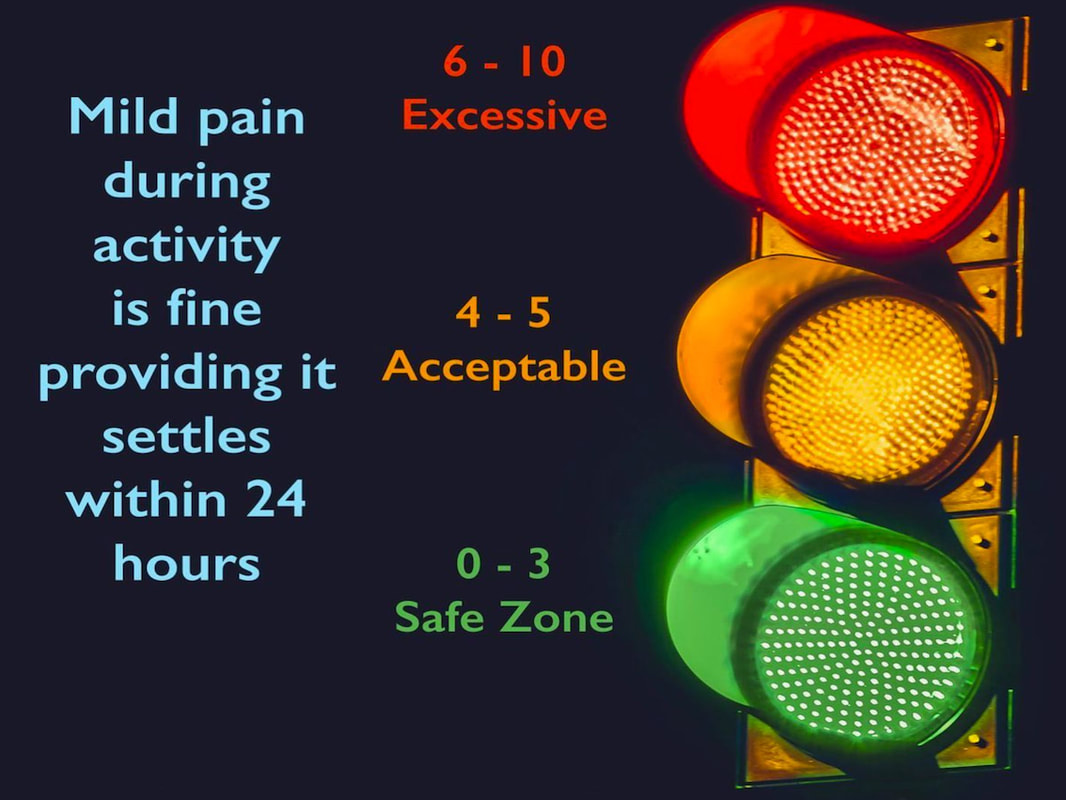
Some lower level pain is 🆗, a lot is not.
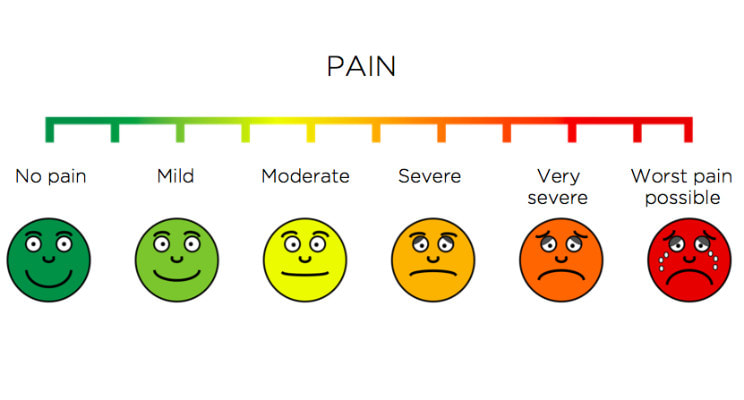
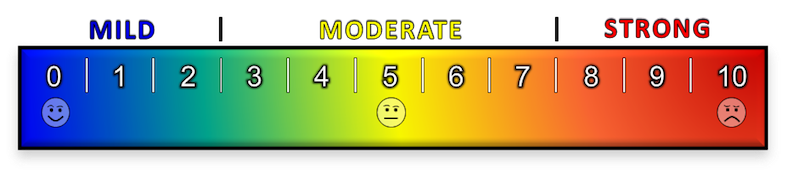
We can rate pain from 0 t0 10 with no pain scoring a 0 and 10 is horrible pain (as indicated above). Using this scale we can rate our activity. Some activity is appropriate when in pain and other is not.
See the "pain traffic lights" below.
What to do about your pain.... "PEACE & LOVE"



|


|


|


|